

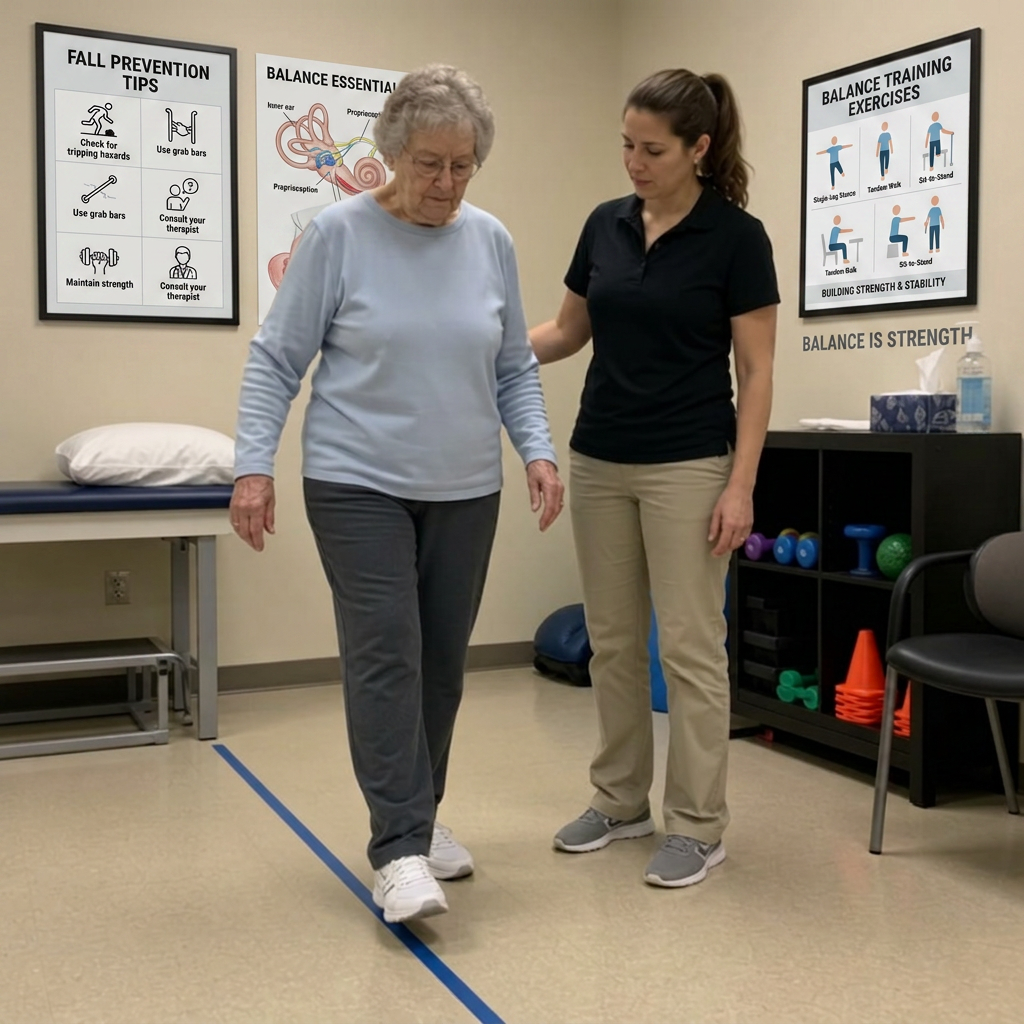
Regain Your Balance, Confidence, and Independence
Maintaining good balance is essential for staying active, independent, and confident. If dizziness, unsteadiness, weakness, or a history of falls has affected your daily life, the experienced physical therapists at Adler Therapy Group provide personalized balance and fall prevention programs designed to help you move safely and confidently.
Our Chesapeake physical therapy team works with adults of all ages, particularly older adults and individuals recovering from injury, illness, or surgery, to improve balance, reduce fall risk, and restore mobility. Through comprehensive evaluations and customized treatment plans, we help patients regain stability and continue enjoying the activities they love.
How Physical Therapy Helps Prevent Falls
Physical therapy is one of the most effective ways to improve balance and reduce fall risk. At Adler Therapy Group, our therapists evaluate the underlying causes of instability and develop individualized treatment plans that address your specific challenges.
Physical therapy can help improve:
- Strength and muscle control
- Coordination and body awareness
- Walking mechanics and stability
- Reaction time and movement confidence
- Overall mobility and independence
By combining therapeutic exercise, education, and functional training, we help patients build the skills needed to move safely in everyday environments.
Comprehensive Balance Assessments
Every balance and fall prevention program begins with a thorough evaluation. Our therapists assess multiple factors that may contribute to balance difficulties, including:
- Walking and gait patterns
- Standing and dynamic balance
- Muscle strength and flexibility
- Functional mobility
- Fall history and risk factors
- Medical conditions affecting balance
These assessments allow us to identify specific concerns and develop a targeted treatment plan that supports your goals and lifestyle.
Personalized Balance Training Programs
No two patients experience balance challenges in the same way. That's why our treatment programs are customized to address each individual's unique needs.
Your balance therapy program may include:
Balance Exercises
Specialized exercises help improve stability, postural control, and coordination during daily activities.
Strength Training
Building lower-body and core strength provides the foundation needed for better balance and fall prevention.
Gait Training
Therapists work with patients to improve walking mechanics, reduce instability, and increase confidence while moving.
Functional Movement Training
Exercises simulate real-life activities such as climbing stairs, getting up from a chair, or navigating uneven surfaces.
Fall Prevention Education
Patients learn practical strategies to reduce fall risks at home and in the community.
Common Balance Exercises
Depending on your condition and ability level, treatment may include exercises such as:
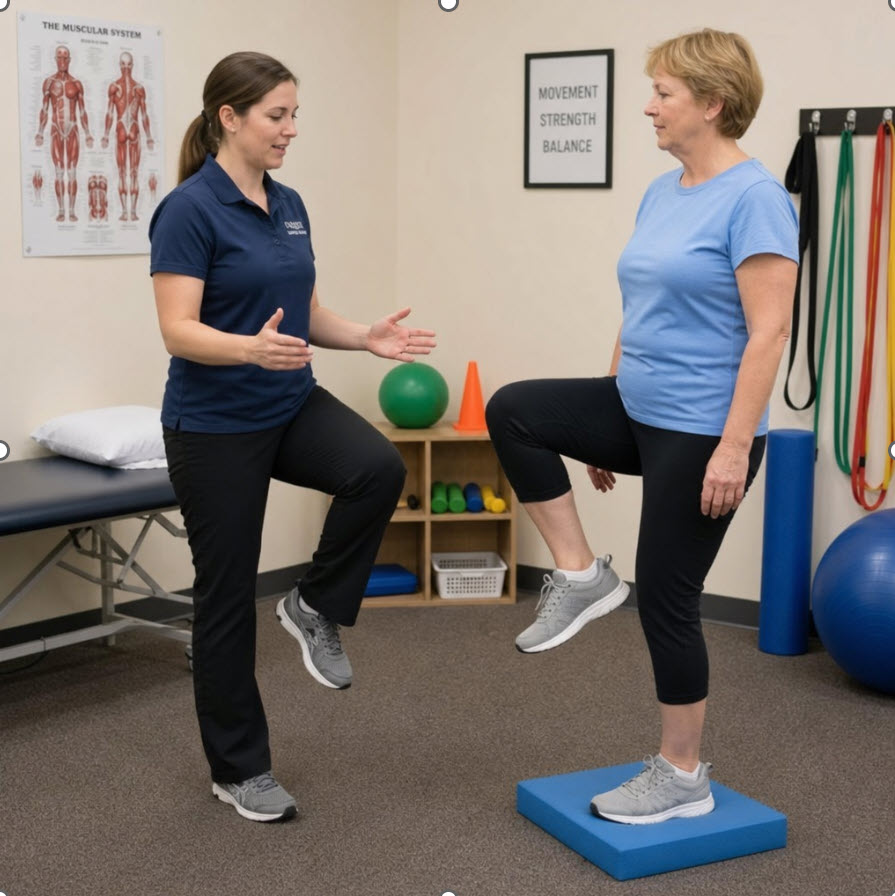
- Single-leg standing exercises
- Heel-to-toe walking
- Sit-to-stand training
- Weight-shifting activities
- Step training and obstacle navigation
- Core stabilization exercises
Each exercise is carefully selected and supervised to ensure safety and effectiveness while progressing at a pace that's comfortable for you.
A Holistic Approach to Better Stability
At Adler Therapy Group, we recognize that fall prevention extends beyond exercise alone. We take a comprehensive approach that considers the physical, environmental, and lifestyle factors that affect balance.
Our therapists may provide guidance on:
- Home safety modifications
- Assistive device recommendations
- Activity modifications
- Strength and fitness programs
- Long-term balance maintenance strategies
By addressing all aspects of fall prevention, we help patients achieve lasting improvements and greater confidence in their daily lives.
The Benefits of Balance and Fall Prevention Therapy
Patients who participate in balance-focused physical therapy often experience significant improvements in both physical function and quality of life.
Benefits may include:
- Improved balance and coordination
- Reduced risk of falls
- Increased strength and mobility
- Greater independence
- Enhanced confidence during daily activities
- Improved participation in recreational and social activities
Many patients find that as their balance improves, their fear of falling decreases, allowing them to remain active and engaged in their communities.
Why Choose Adler Therapy Group?
At Adler Therapy Group, our goal is to help every patient feel safe, confident, and capable in their everyday life. We provide compassionate, individualized care in a supportive environment where your goals matter.
Our team is committed to helping Chesapeake residents achieve better balance, prevent falls, and maintain the active lifestyle they deserve.
FAQs About Balance & Fall Prevention
Yes, we provide post-surgical physical therapy in Chesapeake, VA to help patients recover safely and return to normal activities.
Virginia allows direct access to physical therapy, meaning many patients can begin treatment without a referral. Some insurance plans may still require one. Our Chesapeake team can help confirm requirements before your first visit.
Balance therapy can benefit adults of all ages who experience dizziness, unsteadiness, weakness, difficulty walking, or a history of falls. It is especially helpful for older adults, individuals recovering from surgery or injury, people with neurological conditions, and those whose balance issues are limiting their daily activities. Physical therapy addresses the underlying causes of instability to help improve safety, mobility, and confidence.
Our Chesapeake physical therapy clinic commonly treats orthopedic injuries, post‑surgical recovery, sports injuries, joint pain, and mobility limitations. Treatment plans are personalized to each patient's needs and goals.
Physical therapists identify the factors contributing to your fall risk, including muscle weakness, poor coordination, impaired balance, gait abnormalities, and environmental hazards. Through targeted exercises, strength training, balance retraining, and education, physical therapy helps improve stability and reduce the likelihood of future falls.
Your first appointment includes a one‑on‑one evaluation with a licensed physical therapist. We assess movement, strength, and functional limitations to create a customized physical therapy plan.
Virginia is a direct access state, which means many patients can begin physical therapy without first obtaining a physician referral. If you are experiencing dizziness, balance problems, unsteadiness, or concerns about falling, you may be able to schedule an evaluation with a physical therapist directly and start treatment sooner. However, while Virginia law allows direct access to physical therapy, some insurance plans may still require a physician referral or other authorization before they will cover treatment costs. Medicare beneficiaries can typically start physical therapy without a referral, although Medicare requires a physician or qualified healthcare provider to certify the plan of care for continued coverage. Our team can help verify your insurance benefits, explain any requirements, and coordinate any necessary documentation so you can focus on getting the care you need.
Yes. Our Gainsborough Square location is conveniently located for patients throughout Chesapeake and nearby communities, with on‑site parking available.
Your therapist will perform a comprehensive assessment that may include testing your balance, strength, walking pattern, coordination, flexibility, and functional mobility. The evaluation also includes a review of your medical history, medications, current symptoms, and any previous falls. This information is used to create a personalized treatment plan tailored to your needs.
The length of treatment varies depending on the severity of your symptoms, underlying conditions, and personal goals. Some patients notice meaningful improvements in balance, confidence, and mobility within just a few weeks, while others with more complex balance disorders may benefit from a longer course of care. Your physical therapist will regularly assess your progress and adjust your treatment plan to ensure you continue moving toward your goals.
Here are a few examples:
- Mild Balance Concerns: A healthy, active adult who occasionally feels unsteady when walking on uneven surfaces may only need 4 to 6 weeks of therapy to improve balance, strengthen key muscle groups, and learn fall prevention strategies.
- Recovery After Surgery or Injury: Someone recovering from a knee replacement, hip surgery, or lower extremity injury may participate in therapy for 6 to 12 weeks as strength, mobility, and stability gradually improve.
- Vertigo or Vestibular Disorders: A patient experiencing dizziness or benign paroxysmal positional vertigo (BPPV) may experience significant relief after just a few visits, while those with more complex vestibular conditions may benefit from several weeks of specialized vestibular rehabilitation.
- Chronic Balance Problems: Older adults with a history of multiple falls, neurological conditions, or long-standing balance issues often require a longer treatment plan to safely improve strength, coordination, walking ability, and overall confidence.
Because every patient is unique, your therapist will create a personalized plan based on your symptoms, goals, lifestyle, and progress throughout treatment.
Yes. Physical therapy is highly effective for individuals who have fallen or who are concerned about falling again. Treatment begins with identifying the factors that contributed to the fall, which may include poor balance, muscle weakness, joint stiffness, pain, reduced mobility, dizziness, vision changes, or underlying medical conditions.
Your therapist will evaluate how you walk, move, and perform everyday activities to identify issues affecting your stability. Treatment often focuses on improving balance, strengthening the muscles that support walking and standing, increasing joint mobility in areas such as the hips, knees, and ankles, and addressing movement patterns that may increase fall risk. Physical therapy can also help patients manage pain that causes them to compensate, limp, shorten their stride, or avoid certain movements, all of which can negatively affect gait and stability.
For some individuals, fall risk is also related to decreased bone health and physical deconditioning. Therapy can include weight-bearing and strengthening exercises that support bone health, improve overall function, and help patients remain active and independent. By improving strength, flexibility, endurance, and coordination, patients are often able to walk more naturally and confidently.
In addition to physical improvements, many patients gain confidence and reduce their fear of falling through therapy. This increased confidence often encourages greater participation in daily activities, exercise, social events, and the hobbies they enjoy, helping them maintain a higher quality of life while reducing the risk of future falls.
Your balance and fall prevention program is personalized to address your specific symptoms, physical abilities, medical history, and goals. After a thorough evaluation, your physical therapist will develop a treatment plan designed to improve stability, mobility, and confidence while reducing your risk of falling.
Your program may include:
- Balance training exercises to improve stability during standing, walking, turning, and changing positions.
- Strength training for the legs, hips, core, and other key muscle groups that support safe movement and balance.
- Gait training to improve walking mechanics, stride length, foot placement, and overall safety during movement.
- Coordination exercises that help your body respond more effectively to changes in surface conditions, obstacles, and everyday activities.
- Posture correction to improve alignment and reduce compensatory movement patterns that can contribute to instability.
- Core stabilization exercises to strengthen the muscles that provide support and control during movement.
- Functional movement training that simulates real-world activities such as climbing stairs, getting up from a chair, carrying groceries, reaching overhead, or navigating uneven terrain.
Depending on your needs, treatment may also address factors that contribute to balance difficulties, including:
- Joint stiffness in the hips, knees, ankles, or spine
- Muscle weakness and physical deconditioning
- Pain that causes limping or altered movement patterns
- Reduced flexibility and mobility
- Vestibular disorders, dizziness, or vertigo
- Recovery from surgery or injury
- Neurological conditions that affect coordination and balance
As your strength, balance, and confidence improve, your therapist will progressively increase the challenge of your exercises to help you continue making gains. The ultimate goal is to help you move more safely and independently, whether that means walking through your neighborhood, navigating stairs, participating in recreational activities, or simply feeling more secure performing everyday tasks.
No. While balance therapy is commonly associated with seniors, it can benefit individuals of all ages who are experiencing balance, coordination, dizziness, or mobility challenges.
For example:
- An athlete recovering from an ankle sprain may develop weakness, reduced proprioception (body awareness), and instability that increase the risk of re-injury.
- Someone recovering from a concussion may experience dizziness, balance difficulties, motion sensitivity, or challenges returning to sports, work, or daily activities.
- An individual with vertigo or a vestibular disorder may feel unsteady when walking, turning their head, changing positions, or navigating crowded environments.
- A person recovering from knee, hip, or foot surgery may need balance retraining to restore normal walking patterns and prevent falls during recovery.
- Individuals with neurological conditions such as Parkinson's disease, multiple sclerosis, stroke, or peripheral neuropathy often benefit from specialized balance and gait training to improve safety and independence.
- Even younger adults can experience balance problems due to injuries, chronic pain, muscle weakness, deconditioning, inner ear disorders, or prolonged inactivity.
Balance therapy is designed to address the underlying causes of instability, regardless of age. By improving strength, coordination, joint mobility, posture, reaction time, and body awareness, physical therapy can help patients move more confidently, reduce fall risk, and return to the activities that are important to them. Whether your goal is returning to sports, recovering after surgery, managing dizziness, or simply feeling steadier on your feet, a personalized balance rehabilitation program can help you achieve it.
Yes. Physical therapy can be extremely effective for certain types of vertigo, particularly Benign Paroxysmal Positional Vertigo (BPPV), one of the most common causes of dizziness. BPPV occurs when tiny calcium crystals inside the inner ear become displaced and move into areas where they interfere with normal balance signals. This can cause brief episodes of spinning sensations when rolling over in bed, looking up, bending down, or changing positions.
Physical therapists trained in vestibular rehabilitation can evaluate your symptoms and determine whether BPPV or another vestibular condition may be contributing to your dizziness. Treatment often includes specialized repositioning maneuvers, such as the Epley maneuver, which are designed to return the displaced crystals to their proper location within the inner ear. Many patients experience significant symptom relief after just a few treatment sessions.
In addition to treating vertigo itself, vestibular rehabilitation may include exercises to improve balance, reduce motion sensitivity, enhance gaze stability, and restore confidence during daily activities. If dizziness or vertigo has caused you to limit your activities or fear falling, physical therapy can help you safely return to normal movement.
For more information about BPPV, visit the American Physical Therapy Association (APTA):
https://www.choosept.com/guide/physical-therapy-guide-benign-paroxysmal-positional-vertigo-bppv
Vestibular rehabilitation therapy (VRT) is a specialized form of physical therapy designed to treat dizziness, vertigo, balance disorders, and inner ear conditions. Treatment uses specific exercises to help the brain and body adapt to vestibular dysfunction, improving stability and reducing symptoms.
Did you know? Vestibular rehabilitation has been used in physical medicine for more than 75 years. The earliest forms of vestibular therapy were developed in the 1940s by British physicians Terence Cawthorne and F.S. Cooksey to help injured soldiers recover from dizziness and balance disorders following head injuries. Over time, advances in neuroscience, vestibular research, and even insights gained through space medicine have helped shape the highly effective vestibular rehabilitation programs used today to treat vertigo, dizziness, and balance impairments. [linkedin.com], [eyewiki.org]
Vertigo is not a condition itself but rather a symptom that can have several different causes. Most cases originate from problems within the inner ear and vestibular system, which help control balance and spatial awareness.
Some of the most common causes include:
- Benign Paroxysmal Positional Vertigo (BPPV): The most common cause of vertigo. Studies suggest BPPV accounts for roughly 20% of patients seeking care for vertigo symptoms and more than half of cases of peripheral (inner ear) vertigo. Symptoms are typically triggered by changes in head position, such as rolling over in bed, looking up, or bending down. [pubmed.ncb…lm.nih.gov]
- Vestibular Neuritis: An inflammation of the vestibular nerve, often believed to be related to a viral infection. It can cause sudden onset dizziness, imbalance, nausea, and difficulty walking. In some clinical settings, vestibular neuritis is the second most common vestibular cause of vertigo. [droracle.ai], [droracle.ai]
- Ménière’s Disease: A disorder of the inner ear that can cause episodes of vertigo along with hearing loss, tinnitus (ringing in the ears), and a feeling of fullness in the ear. It accounts for a smaller but significant percentage of vertigo cases. [droracle.ai], [droracle.ai]
- Vestibular Migraine: Migraine-related dizziness is increasingly recognized as one of the leading causes of recurrent vertigo, particularly in younger and middle-aged adults. [droracle.ai]
- Concussions and Head Injuries: Trauma can disrupt the vestibular system and lead to dizziness, balance difficulties, motion sensitivity, and even secondary BPPV. [slideserve.com], [vestibularfirst.com]
- Neurological Conditions: Stroke, multiple sclerosis, Parkinson’s disease, and other neurological disorders can sometimes produce vertigo or balance-related symptoms. [slideserve.com], [droracle.ai]
- Age-Related Balance Changes: As people get older, changes in vision, muscle strength, joint mobility, and vestibular function can contribute to dizziness and instability. Vestibular dysfunction becomes increasingly common with age. [slideserve.com]
The good news is that many causes of vertigo, particularly BPPV and other vestibular disorders, respond very well to specialized vestibular rehabilitation and physical therapy. A thorough evaluation can help identify the underlying cause and determine the most effective treatment approach. [slideserve.com], [pubmed.ncb…lm.nih.gov]
Dizziness can have many causes, but when it is related to a balance disorder, it is often accompanied by symptoms such as unsteadiness while walking, difficulty changing directions, feeling pulled to one side, motion sensitivity, or a lack of confidence when moving around. Some people describe feeling as though they are “floating,” “rocking,” or “off balance” even when they are standing still.
Physical therapists evaluate not only your balance but also your gait, strength, joint mobility, vestibular function, vision-related balance responses, and coordination. This comprehensive approach helps determine whether your symptoms stem from an inner ear disorder, weakness, deconditioning, neurological changes, or another condition affecting balance.
If dizziness is interfering with your ability to walk safely, navigate stairs, drive, exercise, or participate in daily activities, a balance assessment may help identify the underlying cause and appropriate treatment options.
Yes. Many people experience dizziness, balance difficulties, visual disturbances, and motion sensitivity after a concussion. These symptoms can persist long after other concussion symptoms have improved and may make it difficult to return to work, sports, exercise, or everyday activities.
Physical therapists trained in vestibular rehabilitation can assess how the concussion has affected the body’s balance systems. Treatment may include balance exercises, gaze stabilization techniques, coordination training, and gradual exposure to movement patterns that trigger symptoms.
By retraining the brain’s ability to process visual, vestibular, and sensory information, vestibular rehabilitation can help reduce dizziness and improve confidence with movement. Many patients discover that symptoms they thought would simply “go away with time” respond very well to targeted rehabilitation.
Dizziness that occurs when rolling over in bed, getting up from a chair, bending down, looking upward, or turning the head is often associated with vestibular disorders such as BPPV (Benign Paroxysmal Positional Vertigo). In BPPV, tiny calcium crystals within the inner ear become displaced, causing abnormal signals to be sent to the brain when the head changes position.
However, positional dizziness can also be related to vestibular neuritis, vestibular migraine, cervical problems involving the neck, medication side effects, or other balance disorders.
A physical therapist can perform specialized testing to determine whether your symptoms are caused by BPPV or another condition. Once the cause is identified, specific treatments and exercises can often provide significant symptom relief and help restore normal movement.
Absolutely. Many patients who use a cane, walker, trekking poles, or other assistive devices benefit from balance therapy. The goal is not necessarily to eliminate the assistive device, but to help you move more safely, confidently, and efficiently.
Your therapist will assess how you use the device, whether it is properly fitted, and whether your walking mechanics can be improved. Therapy may focus on strengthening muscles that support standing and walking, improving coordination, increasing endurance, and correcting movement patterns that contribute to instability.
In some cases, patients become less dependent on assistive devices as their balance improves. In other cases, therapy helps ensure the device is being used effectively to maximize safety and independence.
Many falls occur because of a combination of physical and environmental factors. While improving strength and balance is important, making your home safer can also significantly reduce fall risk.
Common fall-prevention strategies include:
- Removing throw rugs and tripping hazards
- Improving lighting throughout the home
- Installing grab bars in bathrooms
- Using handrails on stairways
- Wearing supportive footwear
- Staying physically active
- Maintaining joint flexibility and muscle strength
- Following a prescribed home exercise program
Your physical therapist may also provide personalized recommendations based on your specific balance challenges, living environment, and daily activities.
You should consider seeking professional evaluation if you experience dizziness, vertigo, unsteadiness, difficulty walking, recurring falls, near-falls, or a growing fear of falling. Many people assume these symptoms are simply a normal part of aging, but balance problems are often treatable.
Early intervention can help prevent falls, reduce injury risk, improve mobility, and address underlying conditions before they become more serious. The sooner balance issues are identified, the sooner treatment can begin to improve stability and confidence.
If symptoms are causing you to avoid activities you once enjoyed, limit your independence, or worry about your safety, it may be time to schedule a balance evaluation.