

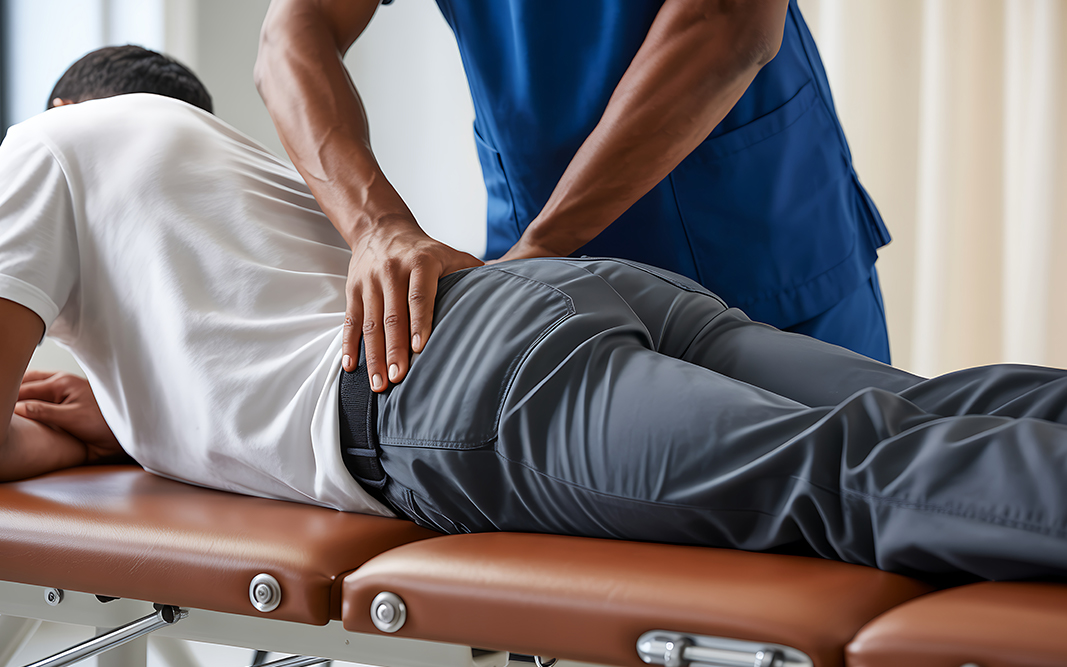
Common Causes of Hip Pain
Hip pain may result from a variety of conditions affecting the joint, surrounding muscles, or soft tissues. Common causes include:
- Arthritis and joint degeneration
- Hip labral tears
- Bursitis or tendonitis
- Muscle imbalances or weakness
- Overuse or sports-related injuries
- Post-injury or post-surgical complications
No matter the cause, untreated hip pain can worsen over time and limit your ability to move comfortably. Recognizing the symptoms early can help you understand when to seek treatment.
Common Hip Pain Symptoms
Hip pain can present in several ways depending on the underlying issue. Common symptoms include:
- Pain or discomfort during movement
- Swelling and inflammation
- Limited range of motion
- Muscle weakness
- Stiffness in the joint
- Difficulty performing daily activities
Learn more about our physical therapy services in Chesapeake, VA and how we help patients restore mobility and reduce hip pain.
FAQs About Physical Therapy for Hip Pain
You should consider seeing a physical therapist if your hip pain lasts more than a few days, keeps returning, limits your daily activities, or makes it difficult to walk, exercise, climb stairs, or sleep comfortably. Early treatment can help identify the underlying cause of your pain and prevent the condition from worsening. A physical therapist can evaluate your movement patterns, strength, flexibility, and balance to develop a personalized treatment plan designed to reduce pain, improve mobility, and help you return to the activities you enjoy.
Many people try to push through hip pain, hoping it will go away on its own. However, if your hip pain lasts more than a few days, continues to return, or begins affecting your daily activities, it may be time to seek professional help. Common signs include pain when walking, climbing stairs, getting in and out of a car, exercising, sleeping on your side, or standing for extended periods.
You should also consider physical therapy if you notice stiffness, reduced range of motion, limping, weakness, or discomfort that causes you to avoid activities you normally enjoy. Even mild hip pain can gradually lead to compensations in the way you walk and move, potentially creating additional problems in the lower back, knee, or opposite hip.
At Adler Therapy Group, a physical therapist will perform a comprehensive evaluation to identify the underlying cause of your symptoms. Your treatment plan may include hands-on therapy, targeted exercises, strength training, flexibility work, balance training, and education to help improve movement and prevent future flare-ups. Early intervention often leads to faster recovery, helping you return to work, recreation, exercise, and everyday activities with greater comfort and confidence.
Many patients are surprised to learn that chronic hip pain is not something they simply have to live with. Physical therapy can often provide an effective, non-surgical solution that addresses the root cause of the problem and supports long-term mobility and joint health.
In many cases, yes. Physical therapy is often recommended as a first-line treatment for hip pain before considering surgery. Treatment focuses on improving joint mobility, increasing strength, reducing pain, correcting movement patterns, and helping you return to everyday activities with greater comfort and confidence. Clinical guidelines support physical therapy as a conservative treatment option for people with mild to moderate hip osteoarthritis. [guidelinecentral.com], [aaos.org]
Research has shown that exercise-based physical therapy may help delay or even prevent surgery for some patients. In one long-term study of individuals with hip osteoarthritis, patients who participated in exercise therapy were 44% less likely to require total hip replacement surgery during the study period compared with those who did not receive exercise therapy. They also went significantly longer before needing surgery, when surgery eventually became necessary. [ncbi.nlm.nih.gov]
While physical therapy cannot prevent every surgery, many patients experience meaningful improvements in pain, mobility, strength, and overall function through a personalized treatment plan. If surgery ultimately becomes the best option, physical therapy can help you prepare for the procedure and improve your recovery afterward. [guidelinecentral.com], [choosept.com]
Yes. Physical therapy is considered one of the most effective non-surgical treatments for hip arthritis. Treatment focuses on improving joint mobility, increasing strength in the muscles that support the hip, reducing stiffness, and helping patients move with less pain. Many people assume they should avoid activity when arthritis develops, but appropriately prescribed exercise is often an important part of managing symptoms and maintaining independence.
Data Highlight: The American Academy of Orthopaedic Surgeons notes that physical therapy can improve pain and function in patients with mild to moderate hip osteoarthritis. [Physical T…rapy Group], [pubmed.ncb…lm.nih.gov]
Helpful Resource: https://www.choosept.com/guide/physical-therapy-guide-to-osteoarthritis-of-hip
Hip pain while walking can be caused by arthritis, bursitis, tendon irritation, muscle weakness, hip impingement, or abnormal movement patterns. In some cases, pain may actually originate in the lower back and be felt in the hip area. A physical therapist can evaluate your gait, strength, flexibility, and joint mobility to identify factors contributing to your symptoms and develop a treatment plan that addresses the root cause.
Data Highlight: Hip osteoarthritis commonly causes pain, stiffness, and difficulty walking, climbing stairs, and performing daily activities. [adlerthera…ygroup.com]
Helpful Resource: https://www.mayoclinic.org/symptoms/hip-pain/basics/definition/sym-20050684
No. While hip pain becomes more common as people get older, persistent pain should not be considered a normal part of aging. Ongoing discomfort can limit mobility, affect sleep, reduce physical activity, and interfere with everyday tasks. Fortunately, many age-related hip conditions can be successfully managed through physical therapy and other conservative treatments.
Data Highlight: Exercise therapy and physical therapy continue to be recommended by healthcare organizations as important treatments for older adults with hip osteoarthritis. [adlerthera…ygroup.com], [pubmed.ncb…lm.nih.gov]
Helpful Resource: https://www.nia.nih.gov/health/exercise-and-physical-activity
Yes. Physical therapy is commonly used to treat sports-related hip injuries, including muscle strains, tendon injuries, hip impingement, overuse conditions, and movement dysfunction. Treatment focuses on reducing pain, restoring mobility, improving strength, and helping patients safely return to their sport or preferred activity while reducing the risk of reinjury.
Data Highlight: Research consistently supports exercise-based rehabilitation as a key component of recovery for many musculoskeletal injuries and movement-related conditions affecting the hip. [adlerthera…ygroup.com], [pmc.ncbi.nlm.nih.gov]
Helpful Resource: https://www.choosept.com
Hip pain at night can occur for several reasons, including arthritis, bursitis, tendon irritation, muscle tightness, or prolonged pressure on the affected side while sleeping. Many people notice symptoms more at night because they remain in one position for extended periods and are less distracted by daytime activities. A physical therapist can help identify contributing factors and recommend exercises, activity modifications, and positioning strategies.
Data Highlight: Hip osteoarthritis commonly causes stiffness and pain that may worsen after periods of inactivity, including sleeping or prolonged sitting. [adlerthera…ygroup.com]
Helpful Resource: https://www.arthritis.org
Yes. Hip conditions frequently cause referred pain, meaning symptoms are felt in areas other than the hip itself. Pain may travel into the groin, buttocks, thigh, lower back, or even the knee. Because symptoms can overlap with other conditions, a comprehensive evaluation is often needed to determine the true source of the problem.
Data Highlight: Groin pain is one of the most common symptom patterns associated with hip joint dysfunction and hip osteoarthritis. [adlerthera…ygroup.com]
Helpful Resource: https://www.mayoclinic.org/symptoms/hip-pain/basics/definition/sym-20050684
Virginia provides direct access to physical therapy, which means many patients can begin treatment without first obtaining a physician referral. This allows individuals to access conservative care sooner and potentially address problems before they become more severe. Insurance requirements may vary, so it is always a good idea to verify coverage before scheduling.
Data Highlight: Direct access laws were implemented to improve access to physical therapy services and reduce delays in receiving treatment. [adlerthera…ygroup.com]
Helpful Resource: https://www.apta.org/your-care/interventions/direct-access
Staying active, performing appropriate stretching and strengthening exercises, maintaining a healthy weight, and avoiding prolonged inactivity may help reduce hip pain. Applying heat or ice and modifying activities that aggravate symptoms may also provide relief. Since different causes of hip pain require different treatment approaches, receiving a professional evaluation can help ensure you’re doing the right exercises for your condition.
Data Highlight: Exercise and physical activity are widely recommended as first-line treatments for many common causes of hip pain, particularly osteoarthritis. [pmc.ncbi.nlm.nih.gov], [adlerthera…ygroup.com]
Helpful Resource: https://www.cdc.gov/arthritis/basics/physical-activity-overview.html
Recovery time varies depending on the cause of your hip pain, how long symptoms have been present, your overall health, and your commitment to treatment. Some patients notice meaningful improvement within a few weeks, while others with chronic conditions may require several months of rehabilitation. Your therapist will regularly evaluate your progress and adjust your treatment plan as needed.
Data Highlight: Studies show that structured exercise programs can help improve pain and physical function in individuals with hip osteoarthritis and other common hip conditions. [pmc.ncbi.nlm.nih.gov], [adlerthera…ygroup.com]
Helpful Resource: https://www.choosept.com/guide/physical-therapy-guide-to-osteoarthritis-of-hip [adlerthera…ygroup.com]
Your first appointment will include a discussion of your symptoms, medical history, daily activities, and goals. Your physical therapist will assess your strength, flexibility, range of motion, posture, balance, and walking mechanics to determine the factors contributing to your pain. Based on the evaluation, a personalized treatment plan will be created to help reduce pain and improve mobility.
Data Highlight: Clinical practice guidelines support physical therapy as an effective conservative treatment option for patients with symptomatic hip osteoarthritis. [Physical T…rapy Group], [pubmed.ncb…lm.nih.gov]
Helpful Resource: https://www.choosept.com
Yes, we provide post-surgical physical therapy in Chesapeake, VA to help patients recover safely and return to normal activities.
Hip pain can be caused by a variety of conditions, including arthritis, bursitis, muscle imbalances, tendon injuries, or labral tears. A physical therapist will evaluate your symptoms and movement patterns to determine the underlying cause and guide treatment.
Yes, physical therapy is often an effective non-surgical treatment for hip pain. It focuses on improving mobility, strengthening muscles, and correcting movement patterns to reduce pain and restore function.
Recovery time depends on the cause and severity of your hip pain. Some patients notice improvement within a few visits, while others may need several weeks of treatment. Your therapist will create a personalized plan based on your condition and goals.
Physical therapy is designed to reduce pain, not cause it. Some exercises may create mild discomfort as your body adapts, but your therapist will guide you through treatment at a safe and appropriate pace.
Virginia allows direct access to physical therapy, meaning many patients can begin treatment without a referral. Some insurance plans may still require one. Our Chesapeake team can help confirm requirements before your first visit.
Our Chesapeake physical therapy clinic commonly treats orthopedic injuries, post‑surgical recovery, sports injuries, joint pain, and mobility limitations. Treatment plans are personalized to each patient's needs and goals.
Your first appointment includes a one‑on‑one evaluation with a licensed physical therapist. We assess movement, strength, and functional limitations to create a customized physical therapy plan.
Yes. Our Gainsborough Square location is conveniently located for patients throughout Chesapeake and nearby communities, with on‑site parking available.